In the broiler production business, precision is the mantra—particularly in hatchery operations.
From egg setting to chicks' dispatch, every step has to be done with impeccable timing. A single weight or deviation in hatch times can lead to significant losses in productivity, chick quality, and profitability.
This is where Poultry ERP systems are revolutionizing the hatchery industry by introducing automation, intelligence, and end-to-end visibility to the process. Welcome to the age of poultry hatch management in the digital age—where 21 days to life is not only a biological phenomenon, but also an automated process.
Overview of the 21-Day Hatch Process
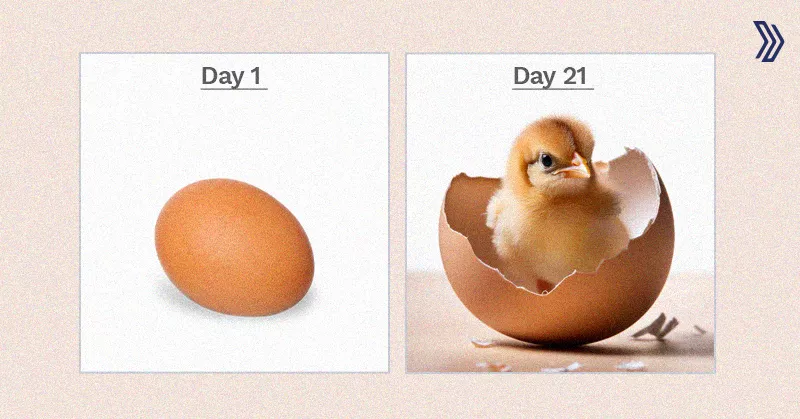
The standard chicken egg hatch cycle is 21 days. The fertilized eggs go through critical stages in hatchers and incubators during this time. The cycle is as follows:
Day 1-18 : Incubation period with stable humidity and temperature
Day 19-21 : Transfer to hatcher, where the chicks begin to hatch
Maintaining optimum conditions and timing is critical. Manual management of the process, however, introduces the possibility of mistakes, inefficiencies, and variability. It is this that explains why most hatcheries are adopting more modern poultry ERP software increasingly to automate and track each phase of the hatch schedule.
Why Manual Hatch Management Fails
Manual hatch scheduling, even with notebooks and spreadsheets, can lead to:
- Batch duplicates.
- Temperature and humidity variances
- Hatchability and egg fertility misreporting
- Missed timelines for transfer and dispatch
- Labour-intensive coordination
These issues escalate rapidly in large-volume hatcheries. Hatcheries require more than data entry; they require hatch scheduling automation in the overall production, inventory, and chick sales process.
The Emergence of Poultry ERP Systems in Hatchery Business
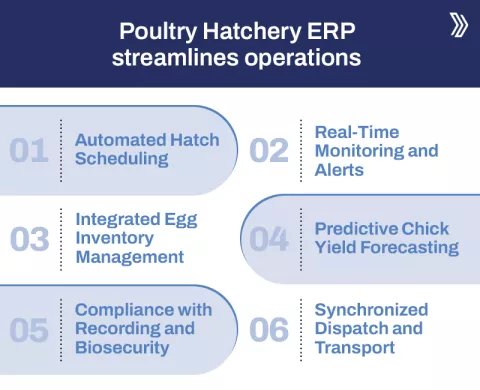
Poultry Enterprise Resource Planning (ERP) software combines all hatchery operations, such as egg collection and setting and chick output, and delivery. Here's how a dedicated Poultry Hatchery ERP streamlines operations:
1. Automated Hatch Scheduling
ERP software allows hatcheries to batch schedule timelines and auto-schedule egg sets and transfers. This, in turn, means fewer human errors and also provides complete visibility of the future hatches.
2. Real-Time Monitoring and Alerts
Existing systems are AI-driven interfaced with IoT sensors to track temperature, humidity, and CO₂ levels in real-time. On parameter violations, warnings are immediately generated—minimizing the chances of embryo loss.
3. Integrated Egg Inventory Management
A poultry ERP monitors more than hatching. It incorporates an inventory of eggs, permitting traceability from breeder farms through to hatcheries. Farmers can observe which batches came from which parent flocks and apply performance to genetics through it.
4. Predictive Chick Yield Forecasting
Using historical hatch rate and fertility figures of the eggs, the system can predict chick yields per batch. This feature supports advanced planning of chick placement, brooding, or commercial sale.
5. Compliance with Recording and Biosecurity
Digital records of all fumigation, sanitation, and vaccination processes undertaken in hatcheries are maintained by poultry ERP software, without paperwork hassle, ensuring biosecurity compliance.
6. Synchronized Dispatch and Transport
Computerized solutions integrate hatch schedules into transportation schedules. When a batch is assigned for hatching, dispatch routes and transport schedules are calculated, thus making chick delivery at a reduced stress level.
Livine: The Game-Changer in Poultry Automation
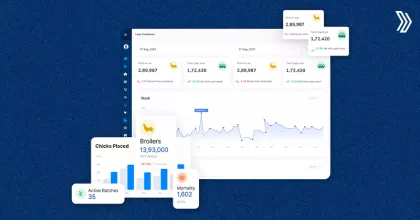
Among the major poultry ERP players, Livine is one complete smart platform designed solely for the poultry industry. Its hatchery module has been created with extreme care in order to improve hatch cycles with unparalleled precision.
Key Hatchery Features of Livine:
- Complete Hatch Calendar: See weekly and monthly hatch plans at a glance
- Egg Source Traceability: Know exactly where every egg came from
- IoT Integration: Monitor incubators and hatchers remotely in real time
- Batch-wise Analysis: Track fertility rate, hatchability rate, and chick mortality
- Smart Alerts: Notifications for egg setting, candling, transfer, and dispatch timelines
Data-Driven Forecasting: Plan chick sales or placement well in advance
With Livine, hatcheries are able to turn disorganized, manual scheduling into an efficient, automated process that occurs 24/7 with little human interaction. The solution also supports multi-location scheduling, which makes it an ideal solution for vertically integrated poultry businesses with distributed hatcheries.
Hatch Scheduling Automation Benefits
Migrating to an automated hatch schedule with poultry ERP has several advantages:
- Enhanced Hatch Rates: By reducing human error and regulating environmental conditions
- Less Waste: Timely reminders help minimize embryo waste.
- Better Planning: Chick yields are forecasted, and subsequent batches are well planned
- More Efficient Labor: Reduced manual coordination translates to lower labor costs.
- Better Decision-Making: Detailed reports allow for better performance benchmarking.
For large poultry farms, these benefits yield more ROI and scalability