The poultry industry is undergoing a revolution. As the global demand for poultry products continues to increase, farmers are no longer relying on traditional methods alone. Instead, they're adopting game-changing poultry farming techniques that promise higher productivity, better bird welfare, and sustainable practices.
Whether you're a small-scale farmer or managing a large commercial setup, understanding these modern poultry farming techniques can help you stay ahead of the curve. In this blog, we’ll dive into the methods that are transforming poultry operations, the importance of poultry farming in today’s world, and how smart technologies like Livine are leading the charge.
Why the Shift Toward Modern Poultry Farming?
Poultry farming has long been a crucial part of the agricultural ecosystem, providing protein-rich food sources like meat and eggs to billions. The importance of poultry farming extends beyond food security—it also supports rural employment, economic development, and agricultural innovation.
But with rising costs, climate concerns, and increasing consumer expectations around food quality and animal welfare, farmers are turning to innovation. This is where modern poultry farming techniques come into play—bringing in automation, precision farming, smart feeding, and real-time monitoring to revolutionize the entire poultry lifecycle.
Types of Poultry Farming
Before we explore the new techniques, let’s revisit the primary types of poultry farming, as each type has its specific challenges and opportunities:
- Broiler Farming: Raising chickens for meat, usually up to 6–7 weeks of age.
- Layer Farming: Focused on egg production, often managed for up to 72–80 weeks.
- Backyard or Free-Range Poultry: Small-scale, low-input systems for household or local consumption.
- Integrated or Contract Poultry Farming: A large-scale model where farms partner with corporations for inputs and guaranteed buy-back.
No matter the type, smart management is essential to ensure profitability and sustainability. This is where technology-backed systems of Livine help manage operations with accuracy and foresight.
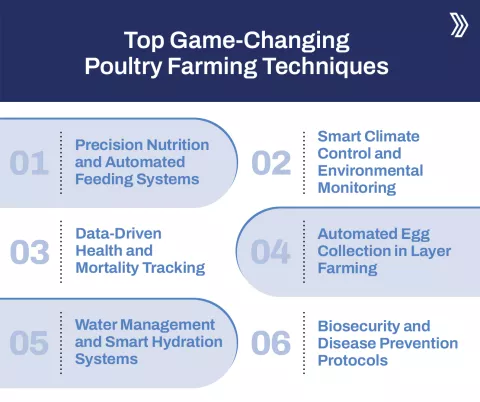
Top Game-Changing Poultry Farming Techniques
Let’s break down the key innovations that are redefining how poultry is raised in today’s modern era.
1. Precision Nutrition and Automated Feeding Systems
Feeding accounts for over 60% of total poultry farming costs. Traditional hand-feeding often leads to inconsistency and wastage. Modern poultry operations are turning to automated feeding systems that deliver the right amount of feed at the right time based on the bird’s age and weight.
With advanced poultry management systems, farmers can track daily feed intake per bird, detect anomalies early, and adjust nutrition plans in real time. This results in better feed conversion ratios and reduced expenses.
2. Smart Climate Control and Environmental Monitoring
Temperature, humidity, and ventilation play a critical role in bird health and productivity. In layer farming, for instance, overheating or poor ventilation can reduce egg production drastically.
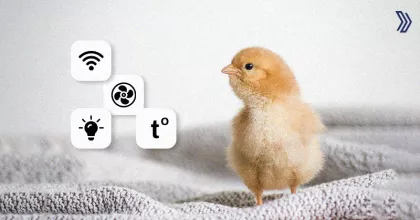
Modern poultry houses now use automated climate control systems that adjust fan speeds, manage lights, and maintain ideal environmental conditions 24/7. IoT sensors integrated with tools enable real-time monitoring and send alerts when parameters deviate, helping prevent disease outbreaks or stress-related losses.
3. Data-Driven Health and Mortality Tracking
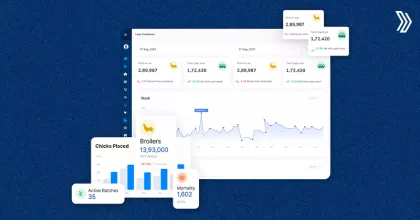
Gone are the days of handwritten flock records. With digital poultry management systems, farmers can monitor bird weight, vaccination schedules, and even mortality patterns with just a few clicks.
Early disease detection through AI-backed data analysis helps farmers take preventive action before it turns into a full-blown outbreak. For example, if mortality in a broiler batch increases unexpectedly, the poultry software flags it instantly, giving owners time to investigate and act.
4. Automated Egg Collection in Layer Farming
In large-scale layer farming, manual egg collection is time-consuming and can result in breakage or contamination. Modern poultry farms now use conveyor belt egg collection systems that gather eggs efficiently and hygienically.
These systems reduce labor costs and ensure better egg quality. Some setups even include automatic grading and sorting based on size and shell strength, allowing farms to supply directly to retail chains or export markets.
5. Water Management and Smart Hydration Systems
Clean and sufficient water is critical for both broilers and layer birds. Smart water management systems now track daily consumption, detect leaks, and ensure optimal hydration.
Livine poultry software allows you to log and monitor water usage trends, helping you identify issues like clogged lines or disease-related drops in intake. Better hydration leads to improved digestion, faster growth, and higher egg output.
6. Biosecurity and Disease Prevention Protocols
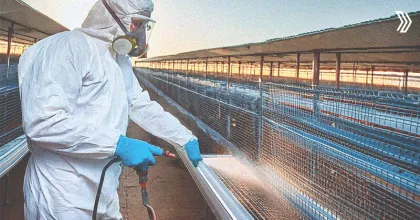
One of the most powerful poultry farming techniques in the modern era isn’t physical—it’s strategic. Biosecurity measures, including restricted access zones, footbaths, controlled entry points, and vaccination schedules, are now standard practice.
With digital tools, you can log every vaccine, medicine, and inspection detail. This not only keeps the birds healthy but also supports certification and traceability, making it easier to comply with global food safety regulations.
7. Sustainability and Waste Management
Modern poultry farming isn't just about profit—it's about being responsible stewards of the environment. Techniques like composting poultry litter, biogas generation from waste, and solar-powered sheds are becoming popular.
Advanced farm management tools allow you to measure your carbon footprint, optimize resource usage, and plan for eco-friendly growth.
The Role of Livine in Transforming Poultry Operations
Livine Poultry software is a next-generation poultry ERP platform designed to make all these modern poultry farming techniques accessible and easy to manage. Here's what it offers:
- Centralized dashboard for all farm data
- Real-time tracking of feed, water, temperature, and performance
- Health and vaccination logs with alerts
- Production forecasting and financial analytics
- Mobile access so farmers can make decisions on the go
Whether you're managing a 1,000-bird layer unit or a 100,000-bird broiler operation, Livine software provides insights that turn guesswork into strategy.