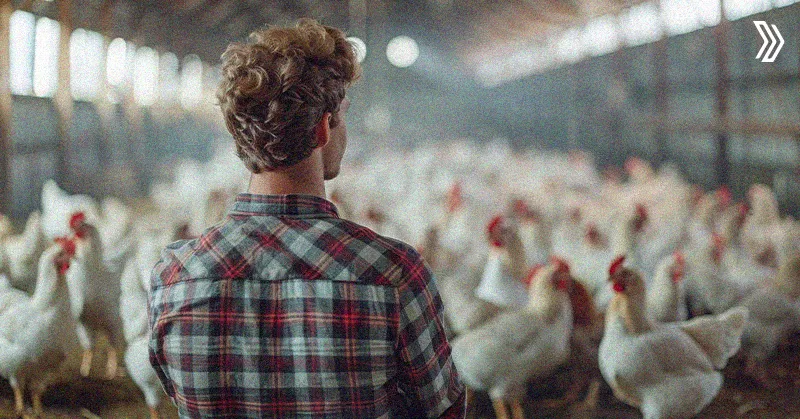
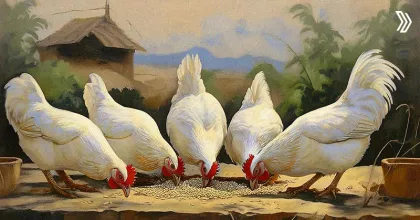
Poultry farming has become the center of modern agriculture, offering a sustainable livelihood source, a source of food, and employment for both rural and urban societies.
Since a higher demand for poultry commodities exists, farmers look for alternative poultry production models to fulfill market demands. Ranging from backyard poultry enterprises to commercial poultry farming, each has its respective merits and demerits.
In this review, we talk about the basic practices of poultry farming, the advantages of each practice, and the utilization of tools such as poultry farming software, which can ensure management, particularly for broiler chicken rearing or running an intensive poultry farm.
What is Poultry Farming?
Poultry farming is the raising and breeding of domesticated birds and chickens to yield eggs, meat, or both. Poultry farming significantly contributes to food security and economic development, depending on the model of farming with the intended use, means, and demand of the market.
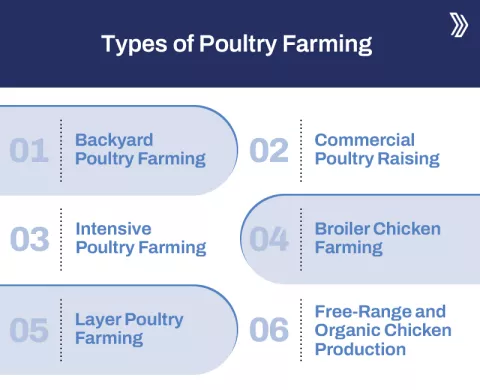
Types of Poultry Farming
It is important to classify different poultry farming models to choose the best model to apply in your business. The most common ones are elaborated below:
1. Backyard Poultry Farming
This is a common tradition and involves the maintenance of some birds in a home or village setting. It is common in rural villages and typically serves as a secondary source of survival and livelihood.
Advantages:
- Limited investment and basic infrastructure.
- Appropriate for low-density markets and small markets.
- Promotes food security in rural communities.
Livine's poultry management software makes it simpler to monitor bird health, egg production, and feeding schedules-even in backyard operations-from which incremental expansion is simpler.
2. Commercial Poultry Raising
This is a mass production system for meat or eggs, usually from thousands of birds. This is a highly organized and profit-maximizing system with specialized birds and optimized feeding systems.
Benefits:
- High return on investment
- Every day supply to satisfy market demand
- Opportunities for export and branding.
Accuracy and decision-making based on data are crucial to the successful operation of a commercial poultry farm. Livine provides real-time analytics, inventory tracking, and performance dashboards that are tailored to help farmers minimize wastage, improve flock health, and improve profitability.
3. Intensive Poultry Farming
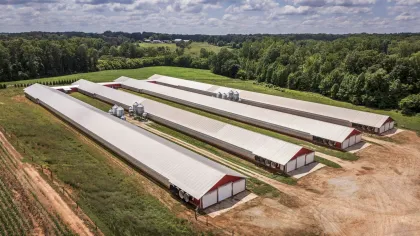
Intensive poultry farming is one form of intensive commercial farming, which keeps birds in closed environments with high stocking levels. It is for high production within small spaces.
Advantages:
- The effective use of resources and land.
- Additional cycles of growth and production.
- Lower labour expenses because of automation.
Intensive systems need careful temperature, ventilation, and disease control monitoring. Livine software integrates environmental sensors, health alarms, and automatic records to provide optimal conditions and lower mortality.
4. Broiler Chicken Farming
Broiler culture refers to the cultivation of chickens for meat production. They are grown for rapid growth and can be marketed at 6–8 weeks.
Benefits:
- Rapid turnaround and high profitability.
- High feed-to-meat conversion ratio
- Year-round market demand
Broiler chicken farming involves constant monitoring of feeding schedules, weight, and infection from diseases. Modern poultry management software facilitates this with automatic recording, growth monitoring, and predictive analysis that enable farmers to make timely decisions and maximize production.
5. Layer Poultry Farming
Layer rearing is the raising of hens for egg production. The chickens are raised in a manner that allows them to lay more than a single egg during their lifetime.
Advantages:
- Daily income from egg sales
- Less expensive feed than broilers
- Long production lead times (72 weeks or longer)
Livine's technology allows farmers the capability to monitor laying patterns, light schedules, and feed intake, all through one combined dashboard, ensuring a consistent laying of eggs and flock health.
6. Free-Range and Organic Chicken Production
These models enhance avian welfare and expression of natural behaviors. The birds have access to outdoor spaces and receive organic foods, which are sometimes sold at high prices in niche markets.
Advantages.
- Enhanced market worth of ethically produced products
- Enhanced bird welfare and lower stress levels.
- Environmentally friendly practices
Organic or free-range farming businesses need to have strict record-keeping and management. Poultry software enables farmers to monitor the origin of feed, outdoor exposure, and certification history in order to maximize transparency and audit readiness.
Advantages of Raising Poultry
Irrespective of the model used, poultry farming has several significant benefits:
- High Return on Investment: Poultry farming is profitable, when done right, thanks to its short production cycles and high demand.
- Scalability: The farms may start small and expand quite rapidly with proper planning.
- Food Security: Poultry foods are a significant source of protein for millions of consumers.
The Significance of Poultry Software Management
The contemporary poultry rearing practice has improved significantly from the archaic practices of merely feeding the birds and collecting eggs. It now incorporates data-driven decision-making, health tracking, stock management, and compliance tracking.
In view of such improvement, the application of poultry management software has become necessary.
Livine, the number one poultry management platform, empowers farmers with:
- Real-time flock health tracking
- Computerized weight and feed records.
- Reminders for disease and vaccination
- Performance reports and profitability reports,
- Availability on desktop and mobile platforms
Whether you have backyard chickens, are starting commercial chicken production, or running an intensive chicken-producing enterprise with broiler chickens, Livine helps you to remain organized, in compliance, and profitable.