Managing a poultry business is not easy. There are a lot of things to keep track of like how food the birds are eating how healthy birds are and how much money the business is making. For a time many poultry farms and businesses have used manual records, spreadsheets and just remembered things to make decisions.. As the industry gets more competitive using software to manage poultry businesses is becoming a smarter idea.
In this article we will compare poultry management with software-based poultry management. We will look at the limitations of methods and see how digital tools like Livine can help poultry businesses work more efficiently accurately and profitably.
What is Manual Poultry Management?
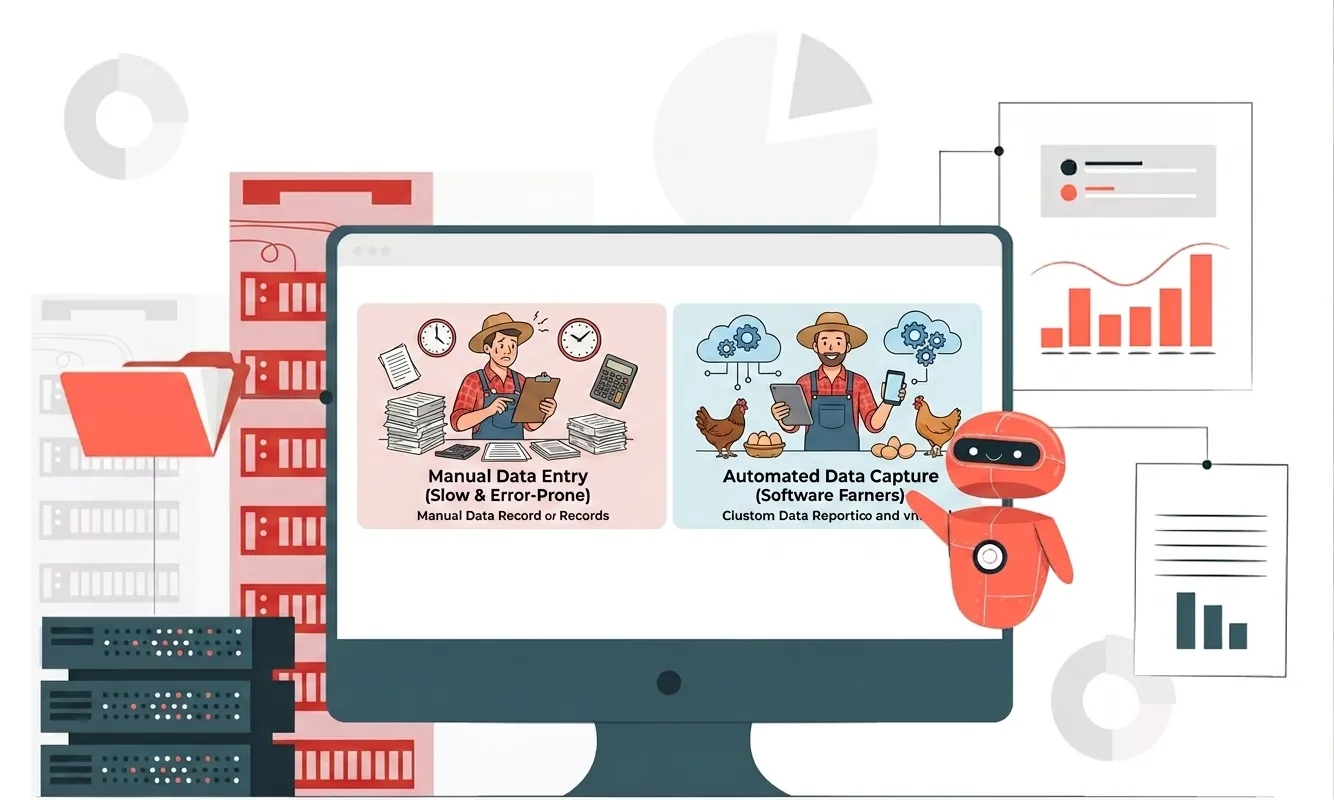
Manual poultry management means using paper and pens to keep track of everything that happens on the farm. This can work for small businesses or family-run farms that do not have a lot of work to do. Many owners use notebooks to write down things like how food the birds are eating how many birds are moving around how many birds are dying, how much money is being spent how much money is being made and how much stock there is.
At first manual management might seem simple and cheap. There is no need to buy any software, train staff or change how things are done. However when the business gets bigger problems start to happen. More birds, workers, more suppliers, more sales channels and more data make it hard to keep track of everything manually. Even a small mistake in record-keeping can lead to loss, poor planning and bad decisions.
What is Software-Based Poultry Management?
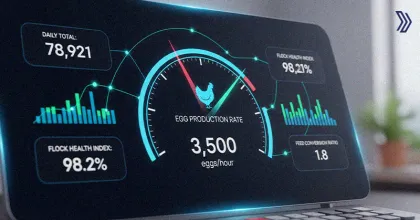
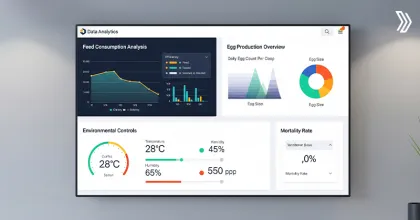
Software-based poultry management uses a computer program to manage and monitor everything that happens on the farm. Of using notebooks or spreadsheets all the information is stored in one system that updates in real time. This can include things like inventory, food usage, batch records, bird deaths, production data, expenses, sales and how well the farm is operating.
A good poultry management software helps business owners and managers see what is happening on the farm. It reduces the amount of work that needs to be done by hand increases accuracy and makes decision-making faster. In a business where time, efficiency and cost control are very important software gives a big advantage.
Manual Management: Where It Falls Short
Manual systems often create problems that are not seen away but become expensive over time. One big issue is inaccuracy. When data is written down by hand or entered into spreadsheets later mistakes are common. A missed entry duplicate record or calculation error can distort the picture.
Another challenge is lack of visibility. In management it is hard to know exactly how much stock there is, how much food the birds are eating or how well each batch is doing at any given time. Owners often have to wait for updates, which means they react after the problem has already affected operations.
Manual methods also slow down reporting. If a business wants to know the death rate, expense trend or batch profitability someone has to collect data from multiple files and calculate it manually. This wastes time. Makes reporting inconsistent.
As poultry businesses get bigger coordination becomes another issue. If farm workers, supervisors, accountants and owners are all using records, confusion is likely. One team may update a notebook another may use a spreadsheet. The owner may depend on phone calls. This disconnected workflow often leads to missed information and poor control.
Software-Based Management: Why It Works Better
Software-based poultry management solves many of these issues by bringing all the data into one system. Of spending hours collecting and reconciling records managers can see updated information in real time. This saves time. Gives a more accurate view of operations.
One of the benefits is better control over stock and inventory. Poultry businesses deal with food, medicine, birds, eggs, packaging and other supplies. Software helps track what comes in what goes out and where losses may be happening. This makes it easier to reduce waste and prevent losses.
Another advantage is more reliable decision-making. When all the data is available in one place owners can compare batches, track performance trends. Identify issues early. For example if food consumption is higher than expected or bird deaths are rising in a batch software makes it easier to detect and act quickly.
Software also helps standardize operations. Whether the business has one farm or several locations the same process can be followed consistently. This improves accountability. Makes expansion easier.
Manual versus Software: A Practical Comparison
Manual poultry management may seem cheaper at first. Software-based management usually delivers better value in the long run. Manual systems may not have a subscription cost. They create hidden costs through errors, delays, inefficiency and missed opportunities. Software may require investment. It often saves more money by improving accuracy and control.
Manual records are also harder to scale. Once a business gets bigger the workload on staff increases sharply. More batches mean entries, more chances of mistakes and more time spent on administrative work. Software handles scale because digital systems are designed to manage large volumes of data with less effort.
When it comes to visibility software clearly wins. Manual systems often give a partial picture of operations while software gives real-time insights. This matters because poultry businesses need to act not after the fact.
In terms of reporting manual methods are slow and inconsistent. Software can generate reports instantly making it easier to monitor profitability track productivity and review performance. That is an advantage for owners who want to run the business with more confidence.
Business Impact of Going Digital
The shift from manual to software-based poultry management is not about convenience. It directly affects business performance. Better tracking means cost control. Better reporting means planning. Better visibility means surprises.
For poultry businesses profit often depends on controlling losses across operations. Food waste, stock errors, delayed decisions and poor record-keeping can all reduce margins. Software helps address these issues by creating an organized and data-driven workflow.
It also supports growth. A business that depends entirely on records may struggle to expand into more farms, batches or markets. Software provides the structure needed to grow without losing control.
How Livine Can Help?
This is where Livine becomes very useful. Livine can help poultry businesses move from scattered records to a centralized digital management system. Of relying on notebooks, spreadsheets and disconnected communication Livine helps bring operational data into one platform.
With Livine poultry businesses can improve visibility across stock, production, expenses and performance. This helps owners and managers make more informed decisions. It also helps reduce errors, which are common when records are handled by hand.
Livine can also support efficient workflow across teams. When everyone works from the system there is less confusion and better accountability. That means operations from the farm floor to management level.
For businesses focused on profitability Livine can help identify where money is being lost and where performance can be improved. For example better stock control and clearer reporting can reveal inefficiencies that might otherwise stay hidden in records.
In short Livine is not a software tool. It can become a business control system that helps poultry enterprises run smarter faster and with confidence.
Who Should Switch First?
Not every business moves to software at the speed but some should switch sooner than others. Poultry businesses with batches, growing operations, several staff members or frequent stock movement will benefit most from software-based management. These businesses face complexity, which makes manual methods increasingly unreliable.
Businesses that want to improve reporting reduce losses or prepare for expansion should also consider switching. If decisions are still being made based on delayed data software can make a noticeable difference.
Smaller poultry businesses can benefit if they want better organization and a stronger foundation for future growth.